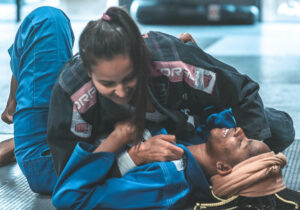
Have you ever found yourself struggling to make it through a BJJ class or pushing hard to get to the end of your workout? Maybe you want to train, improve, get better at your art, or get that workout in… but there is just no energy left in your tank! Why is this happening and what can you do about it?
The need for energy during training is critical! Without energy, we would not be able to move let alone train or perform in a fitness or martial arts class. The first law of thermodynamics states that energy can never be created or destroyed, it can only be transferred. The question becomes, how do we ensure that we have the most energy available to transfer into an action like a pushup, a takedown, or a kick?
Energy enters the body through the foods that we eat. Before that food can become usable energy it must be converted into smaller substrates that include protein, fats, and carbohydrates. Carbohydrates are digested and converted into glucose that gets absorbed into the blood and used as energy or stored in the liver and muscles as glycogen for use later. Triglycerides come from fats we ingest and can provide energy for prolonged bouts of exercise. Finally, protein can provide a source of fuel during starvation or in a negative energy balance through a process called gluconeogenesis.
These molecules are then stored in cells as adenosine triphosphate (ATP). ATP is a high-energy molecule that is used in all cellular and mechanical work, including exercise. Without getting too technical, the three metabolic pathways that are used to create ATP are the ATP-PC system, the glycolytic system (glycolysis), and the oxidative system (oxidative phosphorylation). Without these proper fuels, we will not have the energy to focus and have a great training session.
Energy is measured in Calories that provide your body with the necessary macronutrients (protein, fats, and carbohydrates) to fuel your daily activity. A Calorie (capital C) or kilocalorie is equal to 1000 calories (lowercase c) which is the amount of energy required to raise the temperature of 1 gram of water 1 degree Celsius. This is what we are all managing when we are counting Calories for our day, our energy intake.
Humans get the energy to transfer into action from the food we eat. How much you eat, what you eat, and when you eat all play a critical role in your athletic performance, response to exercise, and your subsequent recovery. Lack of energy in a training session will affect your ability to focus, learn, and perform.
The amount of information published on diet and nutrition is staggering and often inconsistent, making drawing conclusions difficult. The bottom line is that there is no one size fits all diet. What worked for your friend from Muay Thai class may not work for you! For performance, body composition, or health you must figure out what works for you based on your goals and performance needs!